
For more than a century, diamonds have been one of Africa’s most valuable natural assets. From the vast mines of Botswana to the diamond fields of Angola, South Africa, Namibia and Lesotho, these stones have funded public services, supported government budgets and provided livelihoods for thousands of families.
Today, that foundation is facing an unprecedented challenge.
The threat is not coming from another mineral-rich nation or a new discovery underground. It is emerging from laboratories thousands of kilometres away, where diamonds that are chemically identical to natural stones can now be created within weeks.
The rise of lab-grown diamonds is reshaping a market that African economies have long depended on. While consumers benefit from lower prices and wider choice, producing nations are confronting difficult questions about the future of one of their most important export industries.
The story began in 1954 when American scientist H. Tracy Hall successfully produced the first synthetic diamond at General Electric’s research laboratories. At the time, the breakthrough attracted scientific interest but posed little threat to the jewellery market. Natural diamonds retained their status as rare luxury items, formed under immense pressure deep within the earth over billions of years.
For decades, that remained the case.
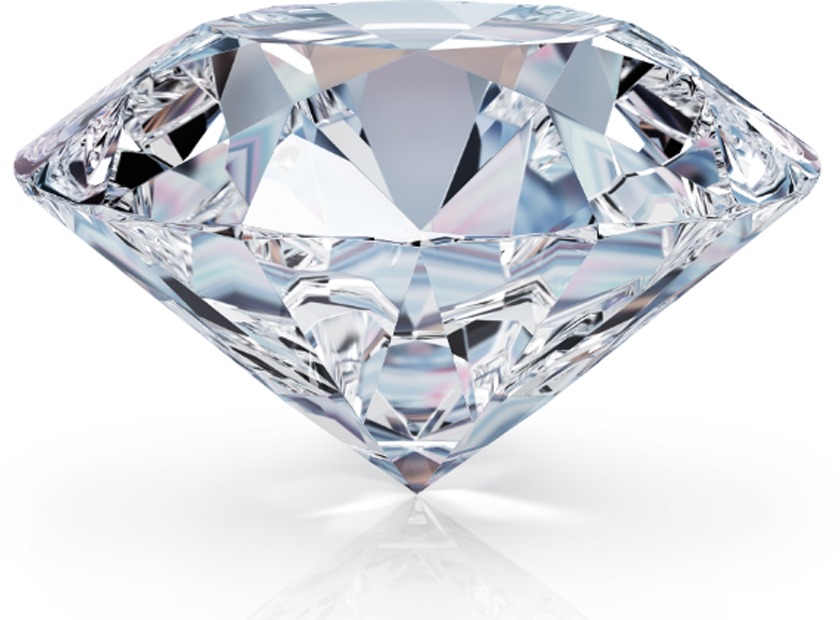
Advances in technology, however, have transformed synthetic diamonds from a scientific novelty into a commercial force. Modern lab-grown diamonds possess the same physical, chemical and optical characteristics as natural stones. To the naked eye, there is virtually no difference.
What once took nature billions of years can now be achieved in controlled laboratory conditions in a matter of weeks.
This shift has dramatically altered the economics of the industry.
Lab-grown diamonds have become increasingly popular, particularly among younger consumers who prioritise affordability. Prices have fallen sharply as production capacities expanded, especially in China and India. A synthetic diamond that cost thousands of dollars just a few years ago can now be purchased for a fraction of that amount. For many buyers, the opportunity to acquire a larger stone at a significantly lower price has proven irresistible.
As a result, natural diamonds are no longer competing solely against each other. They are competing against a technologically manufactured alternative that is becoming cheaper every year.
The effects are already being felt across Africa.
Botswana provides perhaps the clearest example of the risks involved. Few countries have managed their mineral wealth as effectively. Diamond revenues have helped transform the country from one of the world’s poorest nations at independence into an upper-middle-income economy. Roads, schools, hospitals and public services have all benefited from the sector’s success.
Yet Botswana’s dependence on diamonds also makes it particularly vulnerable to changes in global demand. With export earnings, government revenues and economic activity closely linked to the industry, any sustained decline in diamond prices quickly feeds through to the broader economy.
Across the region, similar pressures are emerging.
South Africa’s diamond industry has experienced a steady decline in employment and revenue over the past decade as market conditions have weakened. Mining companies have responded by scaling back operations and delaying investment decisions.
Angola has managed to maintain production and export growth, but lower average prices suggest that producers are receiving less value for every carat sold. Namibia and Lesotho have also felt the impact of weaker demand, highlighting the challenges facing smaller economies that rely heavily on diamond revenues.
The problem extends beyond mining.
For decades, Africa has exported the majority of its diamonds in rough form, while much of the value generated through cutting, polishing, branding, marketing and jewellery manufacturing has been captured elsewhere. As margins tighten, the limitations of this model are becoming increasingly apparent.
This has sparked renewed calls for beneficiation and value addition across the continent. Rather than simply exporting raw stones, policymakers are pushing for greater local participation in processing, trading and jewellery production. The objective is straightforward: retain a larger share of the diamond value chain and create more jobs beyond the mine gate.
At the same time, natural diamond producers are working to strengthen their market position by emphasising what makes their product unique.
A laboratory can replicate the physical characteristics of a diamond, but it cannot reproduce the geological journey behind it. Natural diamonds remain finite resources formed over billions of years, each carrying a story that manufactured stones cannot replicate. Industry leaders believe this rarity remains their strongest competitive advantage.
That argument has become increasingly important as consumers weigh affordability against exclusivity. While lab-grown diamonds continue to gain market share, natural stones still benefit from their association with rarity, heritage and long-term value.
For Africa, however, the debate is bigger than consumer preference.
Diamonds are not simply luxury products. They are national assets that have financed development, generated foreign currency and supported economic growth for generations. The success or failure of the industry has real consequences for government revenues, employment and investment.
The emergence of lab-grown diamonds does not mean the end of Africa’s natural diamond sector. But it does signal the beginning of a new era, one in which producing countries can no longer rely on scarcity alone.
The continent’s future success will depend on its ability to move further up the value chain, strengthen regional cooperation and market natural diamonds more effectively to a changing global audience.
The diamond industry is entering a period of profound change. Technology has challenged one of the world’s oldest luxury markets and forced producers to rethink long-standing assumptions.
The question is no longer whether lab-grown diamonds will remain part of the market. They will.
The real question is whether Africa can adapt quickly enough to ensure that the wealth beneath its soil continues to translate into prosperity above it. That challenge, more than the competition between natural and synthetic stones, will determine the future of the continent’s diamond economies.