“The future millionaires of Africa will not come from the oil and gas sector, but from agriculture,” said Mr Similo Nkala at the National Agriculture Conference and Expo held on 24-25 September.
Agriculture employs an estimated 54% to 70% of our population, contributes around 16% directly to GDP, and accounts for 53% of export earnings. Minister of Agriculture Mr Anxious Masuka stressed the need to invest in rural communities and harness their population, because those communities must also contribute to, and benefit from, agricultural development.
“Move up the value chain”
Turning agricultural potential into an export machine requires a shift from raw commodity sales to high-value agro-processing, structured market linkages and strategic investment. Zimbabwe should focus on transforming raw crops such as maize, soybeans, fruits and tobacco into higher-value foods, beverages and oils, rather than exporting them unprocessed only to buy them back at a higher price.
Value chain investment should also target high-impact sectors such as blueberries, dairy, beef and horticulture, which command premium global prices. Partnering major export enterprises with local growers, by supplying certified seed, fertiliser and technical guidance, would guarantee a consistent, high-grade harvest and could raise agriculture’s contribution to GDP.
“Make rural producers part of the export strategy”
Another issue is aggregation. Many rural communities do not produce enough volume to meet export demand, and exports are a game of numbers. More than 80% of our fruit and vegetable exports go to Europe, mostly to the Netherlands. Other destinations include Germany, China, Hong Kong and France. This is the profile of our horticultural export markets.
Blueberry production has been performing and expanding well. However, according to figures confirmed by the Horticultural Development Council, we have only about 850 hectares under blueberries. The crop is in high demand and offers considerable potential to boost our exports. There is ample room to expand production of selected crops and become a leading exporter of horticultural produce.
Demand for avocados has also been substantial. Most were previously destined for Europe, but a recently signed protocol with China now opens the Chinese market. Citrus presents another significant opportunity. More than 60% of enquiries are for oranges, and farmers in Beitbridge report that their entire production is already committed for the next three years. This shows the opportunity to invest in and expand citrus production and exports.
Beyond crops, there is considerable potential to export meat products, including beef and pork. The Gulf Cooperation Council (GCC) market is estimated at around US$2.1 billion, with the UAE importing approximately US$479 million and Saudi Arabia around US$1.4 billion. This is a substantial market, but compliance is critical: the requirements of these markets must be met to export successfully.
“Meeting demand, building supply and unlocking export competitiveness”
Accelerating the agricultural sector requires us first to meet demand and then to build supply. The market is there. Peas, one of our leading export crops, are shipped to Europe between April and August or September. During certain months of that window, as the Horticultural Development Council can confirm, Zimbabwe is among the few suppliers to that market.
Demand is so strong that farmers need not hide their crops from their neighbours. The market is large enough to absorb increased supply, so we must meet demand, build supply and address logistical constraints, including road access and cold-chain management. We must also move up the value chain by investing in processing, branding, intellectual property and the development of premium export products.
Sugar, as a processed product, has led our exports for some time. Structurally, however, it was exported mainly to Europe and the Far East, and Zimbabwe’s participation in regional markets was not particularly strong. We were also exporting mainly raw material, which was then processed further in destination countries to their own specifications.
What, then, do we need to do to export into the region, compete effectively and displace existing sugar suppliers? The first step is to move away from supplying a vulnerable primary commodity and add value. This is partly what we are doing through processing.
Zimbabwe was historically a breadbasket, with the competence and experience to perform. At one stage, we had the largest sugar-processing mill in Africa. We therefore have a history of leadership, competitiveness and reliable supply, and we need to reclaim that status.
Export barriers often arise from policies and regulations. With free trade and regional trading blocs such as SADC and COMESA, we have access to markets in those countries. To enter them, we must make use of our natural advantages.
“Where will the surplus sugar be sold?”
As noted earlier, Zimbabwe has water resources that can sustain production for years, even during drought. Some countries in the region rely on rain-fed sugarcane and experience fluctuations in supply when rainfall is poor. Zimbabwe’s irrigation capacity can therefore help it become a reliable regional supplier.
The sugar industry recently developed a 10-year strategy that aims to double sugar output over that period. Since current production is broadly sufficient for domestic consumption, the key question is where the additional sugar will be sold. The regional market is a potential destination.
Several countries in the region do not produce sugar, including Botswana, Namibia, Lesotho and Comoros. Others have production deficits: the Democratic Republic of the Congo, Angola, Tanzania and Madagascar, while Malawi has also recorded deficits in previous years. Taken together, the region has an estimated sugar deficit of 1.1 million tonnes.
At the same time, some countries produce a surplus. Zimbabwe produces approximately 100,000 tonnes more than it requires, and Eswatini, Zambia and South Africa are also surplus producers. The question, therefore, is how Zimbabwe can compete with these suppliers and improve its performance in regional markets.
2ND EDITION OF THE ZIMBABWE AGRICULTURAL SECTOR SURVEY REPORT 2019-2020 KEY INSIGHTS ON CROP PRODUCTION.
The GOVERNMENT need to come up with deliberate policies to improve smallholder contribution to national output, which is currently on a downward trend with a 54 percent decline recorded in maize production during the 2019/20 season. Communal areas and small-scale farmers contribute towards 69 % of total maize output in the country.
According to Professor Gift Mugano, the lead researcher for the Zimbabwe Agricultural Society and Financial Gazette commissioned Zimbabwe Agricultural Sector Survey, one striking observation from the 2019 maize yield is that, on average, maize yield per hectare declined by about 54%. “On a farming sector basis, in 2019/20, A1, communal areas and small – scale farmers who constitute 69% of total maize output, recorded an average yield of 0.27 metric tonnes/ha down from an average yield of 0.478 metric tonnes/ha in 2018/19. Because of the significant contribution of these small – scale farmers, from a hectarage perspective, the fall in yield per hectare weighed down heavily national output.” Prof Mugano noted that over and above the effects of climate change, policy significantly contributes to poor output in the agricultural sector. Similar to a trend observed in the inaugural sector survey report, the provinces with the highest area under maize production do not contribute the highest output. Midlands province had the highest area under production at 21% but contributed 12% of the output while Mashonaland West at 18% area produced the highest output at 29%. “Seed is being distributed in the wrong provinces. Our recommendation is for government to place more emphasis in growing maize in Mashonaland Central, Mashonaland West and East provinces while more focus on traditional grains and livestock is placed in Midlands, Masvingo and Manicaland provinces.
This will result in significant increase in production for livestock and grains.

The livestock sub sector contributes about 19% to the agricultural GDP. In Zimbabwe Livestock production, productivity of smallholder cattle herds remains very low, with average calving rates of about 45% against a potential of 60%, and offtake rates of about 6% against a recommended 20% annually. The survey also showed that small scale farmers and communal farmers have a combined share of 90% of the total national cattle herd. However, the low slaughter rate of 5% per year is attributed to communal farmers who keep cattle as a store of wealth and not a business enterprise. According to Prof Mugano, with this low slaughter level, it means that income is not circulating in the rural areas and poverty levels are anticipated to remain high. “This practise, if not reversed, will hinder the country’s progress towards attaining Vision 2030 considering the fact that 70% of the Zimbabwean population resides in rural areas”. A mindset shift is a must. Good progress has however been observed in dairy production, and although the current output is still below the annual national demand of 120 million litres, the country has progressively reduced milk imports by 70%.
Impact of Climate Change on Agricultural Production adopted from 2nd Edition Zimbabwe Agriculture Sector Survey (2019-2020).
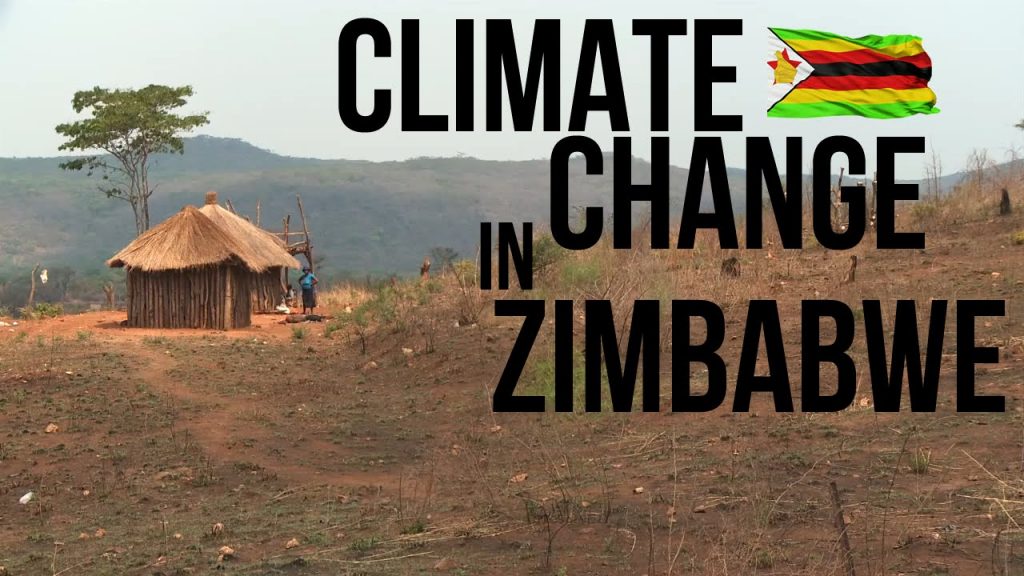
The research shows that climate change vulnerability negatively impacted productivity in the sector. Climate change has manifested through incessant droughts and reduced precipitation which has reduced output of grains by more than 50%. Livestock production has also not been spared with cattle dying due to food and water shortages caused by droughts.
According to the study, Masvingo and Matabeleland South provinces recorded the highest number of poverty deaths in cattle at 17518 and 16863 respectively. This trend, if not addressed, is likely to negatively affect the country’s progress towards rebuilding the national herd. The annual survey gathers sector-wide, in-depth, objective and independent data on agriculture, agribusiness, machinery, equipment, irrigation, climate change, investment, markets and comparative data from regional economies, to inform Zimbabwe’s stage of growth, highlight challenges and illuminate opportunities in agriculture.
Zimbabwe trade deficit continue to soar with indication that the trend will not reverse any time soon. The big question is how can we reserve this trend? There are a number of strategies which can be put in place like raising productivity, improving competitiveness and promoting local products. As we work around these measures it will be important to take notes from other countries with more or less similar conditions with ours. This week’s discussion will draw lessons from El Salvador.
In July 2003 – July 2004, El Salvador hired trade experts to develop an El Salvadoran strengths, weaknesses, opportunities, and threats (SWOT), and a list of priority markets and products derived from the SWOT analysis. This initiative was used to develop an export promotion agency for El Salvador which took into accounts the country’s strengths and weaknesses in international markets. The promotion programs took advantage of strengths/competitive factors and help Salvadoran companies overcome weaknesses. They must also target products that have good prospects in key export regions and sectors.
With respect to the El Salvador competitive factors, the country is at the centre of Mesoamerica (Southern Mexico and Central America), and within easy reach of the United States. El Salvador has good soils and favourable climactic conditions for the production of a wide range of tropical crops. The country’s financial system is well-developed and stable, supported by the country’s adoption of the U.S. dollar as its official currency just like our case. Salvadoran workers, artisans, entrepreneurs and executives, academics, and professionals are well-known for their hard work and initiative; and approximately 2 million Salvadorans reside in the United States, constituting a ready market for traditional Salvadoran products. In addition, El Salvador has a relatively well developed communications and transportation infrastructure.
The minimum 10 daily non-stop flights from El Salvador to cities in the United States facilitate exports of perishable horticulture and other high-value products; and when the port at La Union is completed, El Salvador will have easy access to high-quality maritime service to Caribbean/Atlantic and Pacific destinations. The country’s telecommunications have been privatized and modernized, with high-quality, low-cost international service. With respect to weaknesses, Salvadoran businesses had relatively little experience exporting goods other than traditional primary commodity exports, such as coffee and maquila.
They also had limited knowledge and understanding of the characteristics and cultural idiosyncrasies of consumers in the United States, Europe, and other mass markets. Because most of their exports were coming from Micro Small and Medium Enterprises (MSMEs) couldn’t meet the volume requirements of many potential mass market customers. They lacked the resources and know-how to establish and support their own product brands; and continue to be reluctant to collaborate among themselves, or to cede control over family businesses through mergers and acquisitions. Salvadoran MSMEs in particular have very limited access to state-of-the-art technologies.
In addition, financing for exporters was not widely available or suitable. Many firms, especially among MSMEs, are highly indebted and therefore lack access to additional credit from the banking system. Medium- and long-term (MLT) resources for financing modernization or expansion with acceptable terms are inadequate; equity capital for MSMEs, or effective guaranty mechanisms to facilitate access to MLT credit, is not available; pre-export working capital finance is difficult to obtain; MSMEs cannot get export credit financing to support sales efforts and have difficulty accessing factoring and other related services to facilitate collections; and international monetary transfers by the Salvadoran banking system were expensive and slow. This is also exactly our situation.
On opportunities, El Salvador not only participates in a number of bilateral free trade agreements in Latin America, including agreements with other Central American nations, Mexico, Chile, the Dominican Republic, and Panama, but is also but has a free trade agreement with the US. El Salvador has many opportunities to establish export “beachheads” through sales to the Salvadoran community in the United States. And, given its location and existing capabilities, the country can achieve decisive economies of scale and establish itself as a leading regional centre for the provision of professional services, financial services, transportation services, and warehousing, distribution, and logistical services.With respect to threats, obviously, free trade agreements pose serious threats to the El Salvadoran economy.
At the time the SWOT analysis was undertaken, quota restrictions on apparel exports from China, India, and other Asian nations were scheduled to be eliminated on January 1, 2005. With this, El Salvador could lose up to half of its apparel exports, with potentially devastating consequences for balance-of-payments and employment. The ability of Salvadoran exporters to tap into niche markets in the United States could be affected by changes in U.S. immigration policies and/or the changing demographics of Salvadorans in the United States. Such changes could also reduce the volume of annual remittances to El Salvador. There was internal political instability and obviously this discouraged investment and the growth of new exports; and posed a dollar-denominated production cost rise which was faster than productivity rates Salvadoran export competitiveness will be seriously eroded.
To maintain its international competitiveness, El Salvador put measures to increase productivity throughout its economy and especially in exporting sectors. In doing this, the Salvadoran invested new investment in exporting industries and technology acquisition. This, in turn, will require attracting foreign investment and improving the availability of MLT credit.Initial export promotion efforts concentrated on products and industries where medium-term competitiveness can be established and sustained, and where markets with significant growth potential was identified.
Given its inability to resort to competitive currency devaluations, El Salvador emphasized production and export of products having high value and significant domestic value-added (i.e., products that are highly differentiated and that embody significant intellectual content). With time, as opportunities permitted, Salvadoran exporters ascended the international value-added chain by marketing and distributing branded products within targeted export markets. And, within the Mesoamerican region, El Salvador invested efforts to exploit opportunities, consolidate and expand its leadership as a regional financial, communications, transportation, and services hub.
Zimbabwe shares similar characteristics with El Salvadoran particularly of the issues of:
Key lessons from El Salvador are that in order to promote exports, the starting point is to carry out a SWOT analysis which will inform priorities which gives the country quick wins. We have to target our exports promotion efforts basing on our comparative advantages and the existing demand. In the same vein, we need to take care of our weaknesses and threats as both factors inhibit exports. Then, there is need to establish export promotion agency whose key mandate two fold; that is, support SMEs exports and supports the establishment of business linkages with global players. In our case we have ZimTrade in place what is needed is to equip it with sufficient resources so that it can deliver its mandate on export promotion. In this vein, we may want to start by targeting our exports promotion efforts to South Africa and Europe where the majority of our people resides. In any way, these are our traditional exports markets which can be easy starting point as we know their culture, appetite and we have trade agreements with them.
By: Dr Gift Mugano
Dr Mugano is an Economic Advisor, Author and Expert in Trade and Competitiveness. He is a Research Associate of Nelson Mandela Metropolitan University. Feedback: gmugano@gmail.com. He is currently in Port Elizabeth, South Africa.
In Zimbabwe public private partnerships (PPPs) were mooted way back in 1998 as a viable tool for unlocking private sector support in funding maintenance and development of critical public infrastructure and public services after the government’s commitment to the projects through the public sector investment programme fell precipitously the mid-1990s as a result of the implementation of its Economic Structural Adjustment Programme (ESAP). The then Acting Minister of Finance and Economic Development, Dr Murerwa opinioned that ‘the development of these Guidelines benefited from governments consultations with stakeholders and that the guidelines provide the parameters for the development of the appropriate legal and regulatory framework, to protect the interests of the investors and consumers’.
Specifically, the guidelines indicate the criteria and procedures for the award of contracts, including the principles and elements of the implementation process of Build-operate-Transfer and Concession projects. They state that PPPs shall take various forms such as management contracts, leases, concessions, de-monopolization and full divestiture (sale) of enterprises where possible. They also indicate the specialized institutional arrangements to facilitate the promotion and co-ordination of the PPP process and project implementation and monitoring; and termination of contracts. Potential sectors for PPPs are also identified, and so are guidelines for the financing of PPPs and incentives by the government.
Despite the above early developments, to date, no meaningful PPP initiatives have been implemented in the country. This is because there are still some big challenges that need to be to overcome before private sector funds can start to flow into the country at the required rate. Some of these challenges are:
Inadequate Regulatory, Legal and Policy Environment
Although the private sector may be interested in undertaking the country’s infrastructure rehabilitation and improvement under PPP arrangements, there are still some weaknesses in the enabling environment for PPPs in Zimbabwe. The regulatory, legal and policy frameworks need to be improved. The fact that PPPs tend to fund projects that are long term in nature makes the issue of policy consistency and predictability a key pre-requisite for boosting investor confidence. What the present PPP framework do is to identify the necessity of establishing PPPs in infrastructural development but they offer no clear legal or operational framework for the establishment of these PPPs. Then, the situation was further worsened by the country’s uncertain and poor investment climate, where private property or property rights are not respected.
International experience has shown that private sector participation in infrastructure development requires a well-designed framework of policies in which investors have the assurance that standards of services will be maintained and concessions will be transparently awarded. Measures that fosters efficiency and transparency in the bidding process, ensure sanctity of contracts, and encourage competition are lacking in Zimbabwe. In the same vein, there was no promotion of market-determined tariffs, and separate regulatory and adjudication authorities. In addition, there is no PPP framework that helps in clarifying the role of government, regulators and utilities as well as harmonizing procedures and policies, and enhances public accountability.
Poor Creditworthiness and Slow Pace of Public Enterprises Reform
Most of the infrastructure providers in the country are public enterprises that require restructuring before any private sector participation can take place. Although PPPs offer a unique opportunity for these parastatals to recapitalize, their current poor performance poses too high a risk for private investors. Most public enterprises have been under-performing over the past decades, with their accounts not being properly audited. It is also a well – known fact that Zimbabwe’s public enterprises have very low volumes of sales and low revenue collections owing to structural bottlenecks, inefficiency and the economy’s liquidity crisis. A greater proportion are also both under-funded and heavily indebted, which undermines their creditworthiness and therefore resuscitation. Their restructuring will therefore have to institute changes in their service delivery mechanisms, processes, procedures and institutional structures in order to address some of the supply side constraints crippling their operations.
Perceive Country Risk Profile
The country’s risk profile has also greatly contributed to the low uptake of PPP projects. Over the years, the country faced substantial challenges in accessing funding for its infrastructure rehabilitation and improvement programmes partly because the country does not have resources to take up PPPs, but also due to the prevailing political risks. The land reform programme, poor policies like indigenization policy, political and economic instability repelled potential private investors.
Public Sector Capacity Constraints
Although PPP opportunities for infrastructure rehabilitation and improvement abound in Zimbabwe, finding projects that are well defined, credibly structured, rigorously appraised, financially viable is still a big challenge. This is attributed to insufficient capacity within the PPP sponsoring public entities to identify and implement deals and execute PPPs. This capacity deficit is seen as a big challenge for achieving a steady flow of successfully negotiated PPP deals. It is important to note that PPPs for infrastructure rehabilitation and improvement extend for long periods of time and involve complex financial, risk, and performance arrangements. Specialized skills are therefore required to conceptualize, evaluate, structure, and appraise the projects. The required skill sets include assessing financial projections and revenues, effective ring-fencing of the project, risk appraisal and allocation or mitigation, and other areas related to contract monitoring, tariff adjustments, and dispute resolution.
The South African PPPs Legislative and Regulatory Framework
In terms of how to best improve its PPPs legal and Regulatory frameworks, Zimbabwe can learn a lot from South Africa’s experience with PPPs. The country has the greatest cumulative experience of public-private partnerships in Africa, with over 50 such partnerships at the development or implementation stage at national or provincial level, and 300 projects at municipal level, since 1994. The South African National Treasury, the key ministry that approves these deals, has built on almost a decade of experience in dealing with PPPs, and has developed a PPP Manual and Standardized PPP Provisions to guide all projects of this nature. The South African National Treasury’s PPP Unit was set up in 2000 to oversee all PPPs at national and provincial level in terms of the Public Finance Management Act of 1999.
The government subsequently adopted a step-by-step process to PPPs, rigorously regulated by the Treasury. This sets out the progression from inception (requiring the appointment of a full time project officer and specialist transaction advisors), a feasibility study (which must obtain treasury approval), procurement (which is the actual negotiation and buy-in phase involving at least three treasury approvals), and contract management (which also entails treasury approvals if there are to be material amendments to the PPP agreement). The tests for the regulator at all phases are: affordability, value for money and appropriate risk transfer.
This partnership involves locking in long-term collaboration between both parties to share the costs, rewards and risks of projects — all the possibilities that things could go wrong — unlike the once-off transaction involved in public procurement (where government buys goods and services like offices, vehicles and computer maintenance) or full privatization (where government sells assets to the private sector).
More specifically, South African PPPs are governed by particular pieces of legislation, regulations and practice notes. The Public Finance Management Act 1 of 1999 (PFMA) and Treasury Regulations 16 and Treasury Practice notes issued in terms of the PFMA governs national and provincial government departments and public entities. The Municipal Finance Management Act 56 of 2003 (MFMA) and treasury regulations and Practice Notes issued in terms of the MFMA, govern the Municipal sphere. The act regulates the initiation of feasibility studies for PPPs, and the procurement of PPP agreements and the basic requirements that PPPs must comply with e.g. that it must provide value for money to the municipality (s5 (1)) which means that the performance of a private party in terms of the agreement will result in a net benefit to the municipality in terms of cost, price, quality, quantity, risk transfer or any combination of those factors. Further, the various modules of the PPP Manual and Standardized PPP Provisions are issued as Treasury PPP Practice Notes in terms of the PFMA. Similar Practice Notes are being developed for the municipal sphere and will be issued under the Municipal Finance Management Act (MFMA).
Whilst the PPP legislative and regulatory framework in South Africa has its limitations there are useful statutes which can be used as reference documents by the government of Zimbabwe to improve its own PPPs legislative and regulatory framework.
By: Dr Gift Mugano
Dr Mugano (Ph.D) is an Author and Expert in Trade and International Finance. He has successfully supervised four Doctorate candidates in the field of Trade and International finance, published over twenty – five articles and book chapters in peer reviewed journals. He is a Research Associate at Nelson Mandela University, Registrar at Zimbabwe Ezekiel Guti University and Director at Africa Economic Development Strategies.
Feedback
What is the African Continental Free Trade Area?
In January 2012, the African Union (AU) Heads of State and Government (HOSG) adopted a decision to establish an African Continental Free Trade Area (AfCFTA). The AfCFTA is an important initiative for Africa’s economic integration agenda. Its main objectives include the creation of a single market for goods, services, and movement of persons and investments among 55 African countries, and boosting intra-African trade via better harmonisation and coordination of trade liberalisation and facilitation across African regions and continent at large. In June 2015, negotiations for the establishment of the AfCFTA were officially launched. Since then, there has been a series of meetings under the auspices of the AU towards the finalisation of the AfCFTA.
On 9 March 2018, AU Ministers of Trade approved the Declaration launching the Agreement establishing the AfCFTA, the AfCFTA Agreement, Protocol on Trade in Goods and associated annexes, Protocol Trade in Services and its annexes as well as the Protocol on Rules and Procedures on the Settlement of Disputes. These instruments were signed by the HOSG during the Extra Ordinary Summit of the AU to held on 21 March 2018 in Kigali, Rwanda. Once signed, the AfCFTA Agreement and the protocols will be submitted for ratification by state parties in accordance with their domestic laws. These legal instruments will enter into force (become legally binding) 30 days after ratified by 22 state parties. African countries not party to the AfCFTA Agreement will have to accede to the Agreement.
Scope of the AfCFTA Agreement
The Agreement covers trade in goods, trade in services, investment, intellectual property rights and competition policy. The AfCFTA process is negotiated in two phases. Trade in services and trade in goods have been negotiated during the first phase. Some issues of the first phase (i.e. tariff concessions, schedules of specific commitments for services and rules of origin) are still unsettled. On 9 March 2018, the AU Trade Ministers adopted the Transitional Implementation Work Programme for their finalisation. Investment, intellectual property rights and competition policy will be covered in the second phase. It is hoped that the AfCFTA scope will be widened to cover other substantive disciplines such as electronic commerce.
Architecture of the AfCFTA Agreement
Protocols on trade in goods, trade in services, dispute settlement, investment, intellectual property rights and competition policy, form an integral part of the AfCFTA Agreement. Protocols on trade in goods, trade in services, dispute settlement have been finalised, while Protocols on investment, competition policy, and intellectual property rights will be negotiated in the second phase.
The Protocol on Trade in Goods aims to boost intra-African trade in goods through progressive elimination of tariffs and non-tariff barriers, enhanced efficiency of customs procedures, trade facilitation and transit. It seeks to facilitate trade in goods via enhanced cooperation in the areas of technical barriers to trade and sanitary and phytosanitary measures as well as development of continental and value chains. The Protocol contains several Annexes: Schedules of Tariff Concessions; Rules of Origin; Customs Cooperation and Mutual Administrative Assistance; Trade Facilitation; Transit Trade and Transit Facilitation; Technical Barriers to Trade; Sanitary and Phytosanitary measures; Non-Tariff Barriers; and Trade Remedies. Annexes on tariff concessions, rules of origin etc. are yet to be finalised.
The Protocol on Trade in Services aims to create a single services market through progressive liberalisation and elimination of barriers to trade in services across the African continent. It covers all services in any sector except services supplied in the exercise of governmental authority – services that are supplied not for commercial purposes or in competition with one or more service suppliers. Procurement by governmental agencies for governmental purposes and not with a view to commercial re-sale are excluded from the scope of this Protocol. The Protocol contains three Annexes: Schedules of Specific Commitment; Most-Favoured-Nation Exemption; and Air Transport.
Protocol on Rules and Procedures on the Settlement of Disputes deals with trade disputes arising from the commitments undertaken by state parties under the AfCFTA Agreement. It provides for rules and procedures for the settlement of such disputes. The dispute settlement mechanism provided under the Protocol is similar to that of the Word Trade Organisation system. It is inter-state, and administered by a Dispute Settlement Body (DSB). The AfCFTA DSB, composed of representatives the state parties, has the authority to establish dispute settlement panels and an appellate body, to adopt reports of the panels and appellate body. It also maintains surveillance of implementation of rulings and recommendations of the panels and appellate body. DSB decisions are taken by consensus. The Protocol provides that parties to a dispute must endeavour to settle their dispute through consultation, conciliation and mediation processes. If these processes fail, parties must settle their dispute through arbitration procedures facilitated by an arbitration panel established by the DSB.
Institutional architecture of the AfCFTA Agreement
The adoption, signing and ratification of the AfCFTA Agreement is not sufficient for bringing about the intended results of the AfCFTA. Implementation of the AfCFTA Agreement and the associated legal instruments is equally important. Essentially, state parties are responsible for implementing their rights and obligations under the AfCFTA Agreement.
The AfCFTA Agreement establishes oversight and administrative institutions (independent from existing AU institutions) to assist with the implementation of the Agreement. The Assembly of the AU HOSG is responsible for the overall oversight and strategic policy guidance on the AfCFTA. The Council of African Ministers responsible for Trade, established by the Assembly of the AU HOSG, provides strategic trade policy oversight and ensure effective implementation and enforcement of the AfCFTA Agreement. The Council’s decisions are binding on state parties. The Committee of Senior Trade Officials implements the Council’s decisions. The Committee is responsible for the development of programmes and action plans for the implementation of the AfCFTA Agreement. The AfCFTA Secretariat is an autonomous body within the AU System with an independent legal personality. It has a mandate to oversee, coordinate, facilitate and support the implementation and enforcement of the AfCFTA Agreement, and decisions of the oversight institutions.
Protocols and annexes of the AfCFTA Agreement create several committees to assist with the implementation of specific matters under the Agreement. These include the Committee for Trade in Services, Committee for Trade in Goods, AU Sub-Committee of the Directors General of Customs, Sub-Committee on Trade Facilitation, Committee on Rules of Origin, Committee for Technical Barriers to Trade, Committee for Non-Tariff Barriers, Committee on Trade Remedies, Committee on Sanitary and Phytosanitary Measures, and Dispute Settlement Body.
Disclaimer: This information was extracted from the Trade Law Centre.
Dr Mugano is an Author and Expert in Trade and International Finance. He has successfully supervised four Doctorate candidates in the field of Trade and International finance, published over twenty – five articles and book chapters in peer reviewed journals. He is a Research Associate at Nelson Mandela University, Registrar at Zimbabwe Ezekiel Guti University and Director at Africa Economic Development Strategies.
Feedback
President Mugabe in his state of the nation address (SONA) (in 2015) highlighted the need to deal with corruption as one of the ten points the Government must be seized with. True to his observation, corruption has manifested itself in Zimbabwe like cancer in the bone marrow. Corruption continues to damage the social and institutional fabric in Zimbabwe. From the looks of things, it seems like this disease is getting worse day by day. In line with the call by the President to stop corruption, this week’s discussion focuses on reform options open to the Government to reduce corruption and mitigate its effects.
In doing this, I will focus on a two-pronged strategy aimed at increasing the benefits of being honest and the costs of being corrupt, a sensible combination of reward and punishment as the driving force of reforms. This is a vast subject. However, major strategies which were tried and tested internationally includes political will to deal with corruption, paying civil servants well, creating transparency and openness in Government spending, cutting red tape, removing distorting subsidies, establishing international and deploying smart technology.
Paying civil servants well, whether civil servants are appropriately compensated or grossly underpaid will clearly affect motivation and incentives. If public sector wages are too low, employees may find themselves under pressure to supplement their incomes in “unofficial” ways. Empirical work showing that in a sample of less developed countries, there is an inverse relationship between the level of public sector wages and the incidence of corruption. For Zimbabwe, under tight fiscal space this is a mammoth task. Measures proposed by the Minister of Finance to reduce the public sector bill around 40 percent of the total budget coupled with measures aimed at raising fiscal revenue from the informal sectors and small and medium enterprises will go a long well in creating fiscal space to pay civil servants well.
With respect to creating transparency and openness in government spending, subsidies, tax exemptions, public procurement of goods and services, soft credits, extra-budgetary funds under the control of politicians – all are elements of the various ways in which governments manage public resources. Governments collect taxes, tap the capital markets to raise money, receive foreign aid and develop mechanisms to allocate these resources to satisfy a multiplicity of needs. Some countries do this in ways that are relatively transparent and make efforts to ensure that resources will be used in the public interest. The more open and transparent the process, the less opportunity it will provide for malfeasance and abuse. Studies show ineffective systems of budget control has negative impact on the economy. Countries where citizens are able to scrutinize Government activities and debate the merits of various public policies also make a difference. In this respect, press freedoms and levels of literacy will, likewise, shape in important ways the context for reforms. Whether the country has an active civil society, with a culture of participation could be an important ingredient supporting various strategies aimed at reducing corruption.
New Zealand, which is consistently one of the top performers in Transparency International’s Corruption Perceptions Index, is a pioneer in creating transparent budget processes, having approved in 1994 the Fiscal Responsibility Act, providing a legal framework for transparent management of public resources.
Cutting red tape, there is high correlation between the incidence of corruption and the extent of bureaucratic red tape as captured, for instance, by the Doing Business indicators suggests the desirability of eliminating as many needless regulations while safeguarding the essential regulatory functions of the state. The sorts of regulations that are on the books of many countries – to open up a new business, to register property, to engage in international trade, and a plethora of other certifications and licenses – are sometimes not only extremely burdensome but governments have often not paused to examine whether the purpose for which they were introduced is at all relevant to the needs of the present. The most obvious approach based on international experience is simply to eliminate laws and programs that breed corruption.
Replacing regressive and distorting subsidies with targeted cash transfers, subsidies are another example of how government policy can distort incentives and create opportunities for corruption. According to an IMF, consumer subsidies for energy products amount to some $1.9 trillion per year, equivalent to about 2.5 percent of global GDP or 8 percent of government revenues. These subsidies are very regressively distributed, with over 60 percent of total benefits accruing to the richest 20 percent of households, in the case of gasoline. Removing them could result in a significant reduction in CO2 emissions and generate other positive spillover effects. Subsidies often lead to smuggling, to shortages, and to the emergence of black markets. Putting aside the issue of the opportunity costs (how many schools could be built with the cost of one year’s energy subsidy?), and the environmental implications associated with artificially low prices, subsidies can often put the Government at the center of corruption-generating schemes. Much better to replace expensive, regressive subsidies with targeted cash transfers.
Establishing international conventions, because in a globalized economy corruption increasingly has a cross-border dimension, the international legal framework for corruption control is a key element among the options open to Governments. This framework has improved significantly over the past decade. In addition to the OECD’s Anti-Bribery Convention, in 2005 the UN Convention Against Corruption (UNCAC) entered into force, and by late 2013 had been ratified by the vast majority of its 140 signatories. The UNCAC is a promising instrument because it creates a global framework involving developed and developing nations and covers a broad range of subjects, including domestic and foreign corruption, extortion, preventive measures, anti-money laundering provisions, conflict of interest laws, means to recover illicit funds deposited by officials in offshore banks, among others. Since the UN has no enforcement powers, the effectiveness of the Convention as a tool to deter corruption will very much depend on the establishment of adequate national monitoring mechanisms to assess Government compliance.
Deploying smart technology, just as government-induced distortions provide many opportunities for corruption, it is also the case that frequent, direct contact between government officials and citizens can open the way for illicit transactions. One way to address this problem is to use readily available technologies to encourage more of an arms-length relationship between officials and civil society; in this respect the Internet has been proved to be an effective tool to reduce corruption. In some countries the use of online platforms to facilitate the Government’s interactions with civil society and the business community has been particularly successful in the areas of tax collection, public procurement, and red tape. Perhaps one of the most fertile sources of corruption in the world is associated with the purchasing activities of the state. Purchases of goods and services by the state can be sizable, in most countries somewhere between 5-10 percent of GDP. Because the awarding of contracts can involve a measure of bureaucratic discretion, and because most countries have long histories of graft, kickbacks, and collusion in public procurement, more and more countries have opted for procedures that guarantee adequate levels of openness, competition, a level playing field for suppliers, fairly clear bidding procedures, and so on.
Chile is one country that has used the latest technologies to create one of the world’s most transparent public procurement systems in the world. Chile Compra was launched in 2003, and is a public electronic system for purchasing and hiring, based on an Internet platform. It has earned a worldwide reputation for excellence, transparency and efficiency. It serves companies, public organizations as well as individual citizens, and is by far the largest business-to-business site in the country, involving 850 purchasing organizations. In 2012 users completed 2.1 million purchases issuing invoices totaling US$9.1 billion. It has also been a catalyst for the use of the Internet throughout the country.
The Government of Singapore was able to defeat corruption with effective administration and good governance.
Alongside the statutory measures dealing with corrupt offenders, a proactive approach to curb corruption was adopted in the Government. With the full support of parliament and the heads of Government departments, strict rules and regulations have been formulated to govern the conduct of public officers. A high standard of discipline is demanded of these officers such as:
The commitment of ministers and Heads of Government departments similarly resulted in the establishment of administrative measures to reduce the chances of public officers getting involved in corruption and wrongdoings. These measures include:
In many of the measures discussed above aimed at combating corruption, the underlying philosophy is one of eliminating the opportunity for corruption by changing incentives, by closing off loopholes and eliminating misconceived rules that encourage corrupt behavior. But an approach that focuses solely on changing the rules and the incentives, accompanied by appropriately harsh punishment for violation of the rules, is likely to be far more effective if it is also supported by efforts to buttress the moral and ethical foundation of human behaviour.
All these measures are very effective in dealing with corruption. They can only work if and only if there is political will do eradicate corruption. In Zimbabwe, my take is that there is political will to deal with corruption but there is no political will to actually act against corruption. As we go into the next year, we want to see Government in action in dealing with this vice.
Iwe neni tine basa!
Mina Lawe Silomsebenzi!
By: Dr Gift Mugano
Dr Mugano is an Economic Advisor, Author and Expert in Trade and Competitiveness. He is a Research Associate of Nelson Mandela Metropolitan University. Feedback: +263 772 541 209 or gmugano@gmail.com