
The continent’s agricultural future will depend not just on how much it produces, but on how much value it captures before its produce reaches the consumer.
Ethen Masendu
There is a familiar narrative about African agriculture: the continent needs more farmers, more land under cultivation and higher agricultural output to feed its growing population and supply international markets. While these priorities remain important, they overlook a fundamental weakness in Africa’s agricultural model. The continent has focused too heavily on producing agricultural commodities and not enough on processing them into higher-value products.
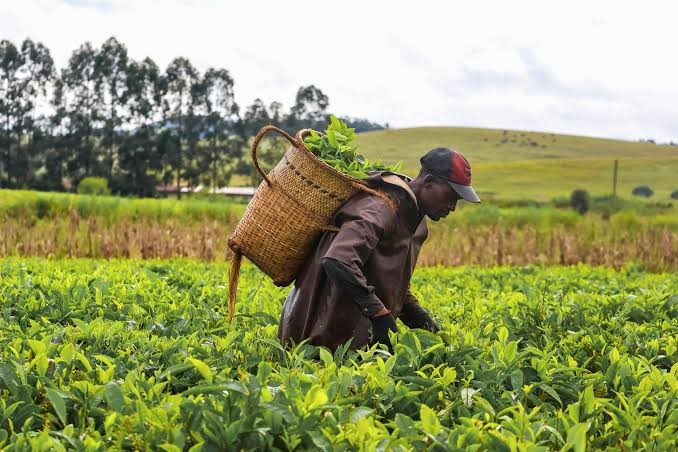
Consider the paradox. Farmers undertake the difficult work of preparing land, purchasing inputs, managing crops, dealing with unpredictable weather and harvesting produce. Yet, in many agricultural value chains, they capture only a small proportion of the final product’s value. The businesses that process, package, brand and distribute agricultural commodities often earn considerably more than those who produce them.
This is not because farming lacks economic value. Rather, it reflects where value is created, how markets are organised and who controls the stages between the farm and the final consumer. Africa has an estimated 33 million to 40 million smallholder farms, while agriculture provides livelihoods for a substantial share of the continent’s population. The sector remains central to economic activity, food security and rural development. The continent also possesses enormous agricultural potential, including an estimated 60 per cent of the world’s remaining uncultivated arable land.
Yet abundant land and favourable growing conditions do not automatically translate into prosperity. Africa must move beyond the assumption that increasing agricultural production alone will deliver meaningful economic transformation.
The more important question is this: How much wealth can Africa generate from what it already grows?
From raw commodities to higher-value products
Kenya’s dairy industry illustrates both the progress Africa has made in agricultural production and the opportunity that remains. The country has substantially expanded milk production, establishing itself as one of the continent’s leading dairy producers, but milk is only the starting point. It can be processed into cheese, yoghurt, butter, ice cream and powdered milk, each serving different markets and offering opportunities for product differentiation, longer shelf life and higher-value commercial activity.
The economic opportunity is not simply to produce more litres of milk. It is to develop an integrated dairy industry capable of transforming those litres into a diverse range of products for domestic, regional and international markets. The same principle applies across African agriculture. Cocoa can become chocolate, coffee can be roasted and packaged, fruit can become juice and concentrates, and groundnuts can be processed into edible oils and peanut butter.
Each additional stage of processing creates opportunities for manufacturing, employment, technology adoption and business development.
Africa’s position in the global cocoa industry makes the case particularly compelling. The continent produces approximately 70 per cent of the world’s cocoa beans, yet much of the processing and chocolate manufacturing takes place elsewhere. Consequently, a substantial share of the value generated by one of Africa’s most important agricultural commodities is captured outside the continent. The pattern extends to coffee, tea, spices, horticultural products and medicinal plants. African economies supply the raw materials, while businesses elsewhere frequently transform them into finished goods that return to African markets at higher prices.
This is how a continent can be rich in agricultural resources yet capture a disproportionately small share of the wealth generated by them.
Processing changes the economics of agriculture
The case for agricultural processing goes beyond the difference between the price of a raw commodity and that of a finished product. Processing fundamentally changes the economics of production, storage, transportation and market access. Take fresh herbs and horticultural produce. Farmers selling fresh products face a narrow window in which to reach consumers. Perishable goods require efficient transport, reliable refrigeration and careful handling. Delays can result in spoilage, rejected shipments and financial losses.
Processing can significantly reduce these constraints. Drying, for example, can extend the shelf life of certain products from days to months or longer while substantially reducing their weight. This lowers transportation costs, makes storage easier and opens access to markets that would otherwise be difficult to serve. Dried herbs and spices can supply food manufacturers, seasoning companies and ingredient distributors. Fruit can be processed into concentrates, purees and dried products. Oilseeds can be transformed into cooking oils, animal-feed ingredients and other industrial inputs.
The commercial possibilities expand further when businesses invest in packaging, branding, product development and quality certification. Processing enables Africa to compete not only as a supplier of agricultural commodities, but also as a producer of ingredients, intermediate goods and finished consumer products. That distinction matters. A country exporting raw coffee beans participates in one segment of the value chain. A country that also roasts, packages and markets coffee develops additional capabilities, businesses and employment opportunities.
The objective should not be to eliminate commodity exports. It should be to ensure that exporting raw produce is a commercial choice rather than the only option available.
Turning post-harvest losses into economic opportunities
The urgency of agricultural processing becomes even clearer when considering the volume of food lost after harvest.
Inadequate storage, unreliable electricity, poor transport infrastructure and limited processing capacity contribute to substantial post-harvest losses across Africa. Fruit and vegetables are particularly vulnerable because of their short shelf lives and sensitivity to handling conditions.
These losses represent more than a food-security problem. They are an economic failure.
When produce goes to waste, farmers lose potential income, traders lose merchandise, processors lose raw materials and economies forfeit opportunities to create employment and earn export revenue. Processing can help address this challenge by creating alternative markets for produce that may not meet the appearance or size requirements of fresh retail markets but remains suitable for manufacturing.
Fruit that cannot be sold fresh, for instance, may still be appropriate for juice production, purees or drying. Certain crops can be converted into flour, animal feed or other industrial inputs. This creates additional outlets for farmers, reduces dependence on a single market and improves the commercial viability of agricultural production.
However, processing cannot operate in isolation. It requires reliable supplies of raw materials, appropriate technology, and access to finance, dependable energy and transport infrastructure. Without these foundations, processing plants risk operating below capacity, undermining their profitability and their ability to sustain demand for agricultural produce.
Building industries around agriculture
The economic benefits of processing extend well beyond the factory floor.
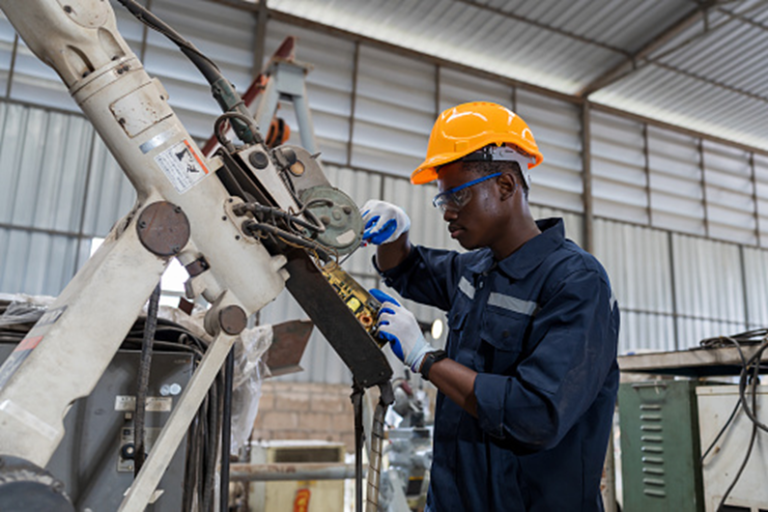
A processing plant generates demand for farmers, but it also creates opportunities for engineers, food scientists, technicians, packaging manufacturers, logistics companies, laboratory services and product developers. These activities help diversify rural economies, strengthen domestic supply chains and create employment beyond primary production. They can also encourage the development of small and medium-sized enterprises supplying packaging, machinery maintenance, transport, storage and other essential services.
The opportunity is significant. The African Development Bank has projected that the continent’s food and agriculture market could reach approximately US$1 trillion by 2030. Realising this potential will require more than expanding cultivated land. It will demand investment in processing facilities, cold chains, storage, packaging, quality assurance, laboratories and export infrastructure. Access to finance will be equally important. Agricultural processing is capital-intensive, and businesses often face difficulties securing affordable, long-term funding for equipment and industrial facilities.
Governments and development finance institutions should therefore prioritise financing mechanisms that support commercially viable processing businesses, particularly those that establish reliable purchasing arrangements with local farmers. There is also a need to strengthen agricultural research, improve the consistency of raw materials and align production with the requirements of processors and consumers. Processing capacity is only economically valuable when it is supported by reliable supply and competitive demand.
Africa must rethink what agricultural success means
In recent weeks, I have found myself thinking as much about dryers, processing equipment and ingredient markets as I have about planting schedules and greenhouse expansion. Those considerations have reinforced a simple idea: the future of agricultural businesses may depend as much on what happens after harvest as on what happens before it.This does not diminish the importance of farmers. On the contrary, a successful processing industry depends on productive farmers who can consistently supply quality raw materials. Without them, factories cannot operate, products cannot reach markets and value chains cannot function.
The challenge is to build a stronger relationship between agricultural production and industrial development. Africa must stop treating farming and processing as competing priorities. They are complementary activities that, when properly integrated, can create more resilient businesses and stronger economies.
The continent should measure agricultural success not only by tonnes harvested, hectares cultivated or yields achieved, but also by the proportion of produce processed locally, the value of finished agricultural exports, the number of jobs created and the income retained within domestic economies. Africa has spent decades discussing how to produce more. It is time to give equal attention to how to transform that production into wealth.
The continent does not simply need more farmers. It needs more processors, manufacturers and agricultural businesses capable of turning its abundant resources into products that command greater value in domestic and international markets. That is how agriculture can become not merely a source of livelihoods, but a foundation for industrialisation, economic diversification and lasting prosperity.