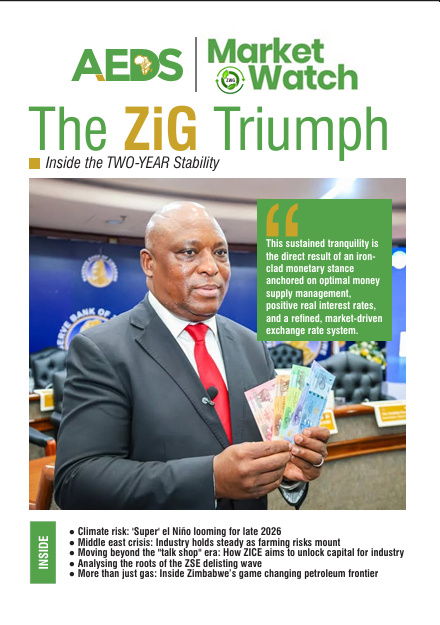
RBZ Meets All IMF-SMP Targets as Reserves Rise Above Expectations
The Reserve Bank of Zimbabwe (RBZ) has recorded a strong performance under the International Monetary Fund (IMF) Staff Monitored Programme (SMP), meeting all its third-quarter quantitative targets and reinforcing confidence in the country’s monetary reform agenda.
Data contained in the RBZ’s Q3 Monetary, Currency, Price and Financial Developments Report show that the central bank comfortably achieved the agreed benchmarks on foreign reserves, money supply growth and lending to the public sector.
The strongest performance was registered in the accumulation of net official international reserves. Against a September target of US$291 million, the RBZ reported provisional reserves of US$315 million, exceeding the programme benchmark and signalling improved external sector resilience.
The central bank also maintained its commitment to fiscal and monetary discipline by recording zero credit to the non-financial public sector, in line with the IMF programme requirement. The outcome reflects ongoing efforts to avoid central bank financing of government operations, a key pillar in maintaining macroeconomic stability.
On liquidity management, the RBZ kept growth in the ZiG monetary base within the prescribed limits. The September ceiling was set at ZiG2.54 billion, while the provisional outturn stood at ZiG2.17 billion, remaining comfortably below the threshold.
The results suggest continued success in the central bank’s efforts to contain excessive money supply growth while supporting exchange rate and price stability.
According to the report, the RBZ not only met all quantitative targets but also made significant progress in implementing structural benchmarks under the IMF-monitored programme following the second SMP review mission conducted in September 2026.
The central bank noted that its self-assessment of third-quarter performance indicates that all agreed targets were achieved with a comfortable margin.
The latest figures are likely to be viewed positively by investors and development partners, as they point to sustained policy discipline and strengthened reserve buffers. Analysts say the performance provides further evidence that the country’s monetary authorities are adhering to reform commitments aimed at consolidating economic stability and enhancing confidence in the ZiG currency.
With foreign reserves rising above target and monetary expansion remaining under control, the third-quarter results underscore the progress being made toward building a more stable and predictable macroeconomic environment.
This will close in 10 seconds