
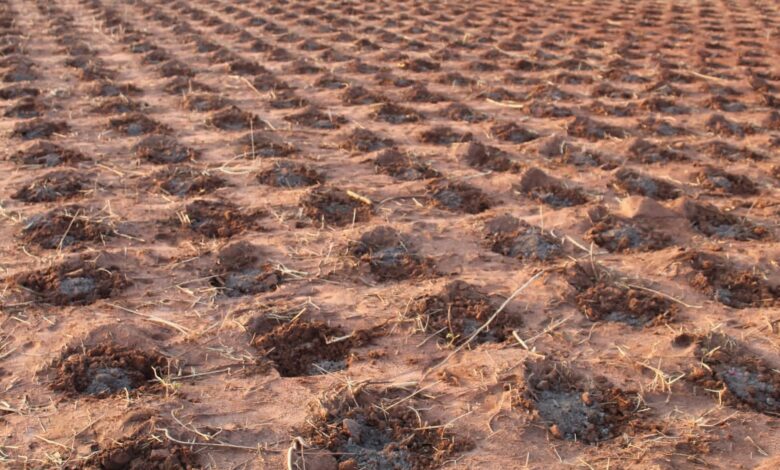
Zimbabwean farmers are making steady progress in preparations for the 2026/27 summer cropping season, with nearly 9.5 million Pfumvudza/Intwasa plots already established as authorities intensify efforts to protect food production from the potential effects of an El Niño-induced dry spell.
Data from the Agricultural and Rural Development Advisory Services (ARDAS) indicates that 9 477 090 plots had been prepared by the end of the latest reporting period, representing 59 percent of the national target of 16 million plots. More than 3.7 million farmers have participated in the programme, underscoring the growing importance of climate-smart agriculture in the country’s farming systems.
The rollout of agricultural inputs is also gathering pace. Deliveries of maize seed under the Presidential Inputs Programme have exceeded planned targets, providing farmers with critical support ahead of planting and helping to ensure timely crop establishment.
Pfumvudza/Intwasa remains central to Government efforts to strengthen resilience against climate shocks. The conservation agriculture model promotes efficient use of soil moisture, improved fertility management and sustainable production practices aimed at maintaining yields under challenging weather conditions.
Farmers have so far prepared over 592 000 hectares under conventional Pfumvudza/Intwasa techniques, while mechanised conservation agriculture has contributed a further 163 000 hectares. Combined, the area prepared now approaches 756 000 hectares nationwide.
Several provinces are recording notable progress. Masvingo and Mashonaland West are leading the programme, while Mashonaland Central, Matabeleland North and Manicaland have each surpassed the one-million-plot threshold.
Beyond land preparation, efforts are underway to improve soil health and water retention. Thousands of farmers have collected mulch and applied agricultural lime as part of broader initiatives to boost soil productivity. Authorities continue to encourage the use of organic manure, compost, minimum tillage and efficient fertiliser application to support sustainable production.
Irrigation development is also receiving increased attention as part of broader drought preparedness measures. More than 14 000 hectares of irrigated maize have already been planted, with Masvingo emerging as one of the strongest-performing provinces. Expanding irrigation capacity is expected to reduce the sector’s vulnerability to erratic rainfall patterns and strengthen cereal production prospects.
Meanwhile, agricultural extension services are scaling up farmer support through training programmes, field demonstrations and advisory visits. These interventions are helping farmers adopt best practices and respond more effectively to changing climatic conditions.
With the planting season approaching, Government and farmers are working together to strengthen preparedness, improve productivity and safeguard national food security in the face of increasing climate uncertainty.