

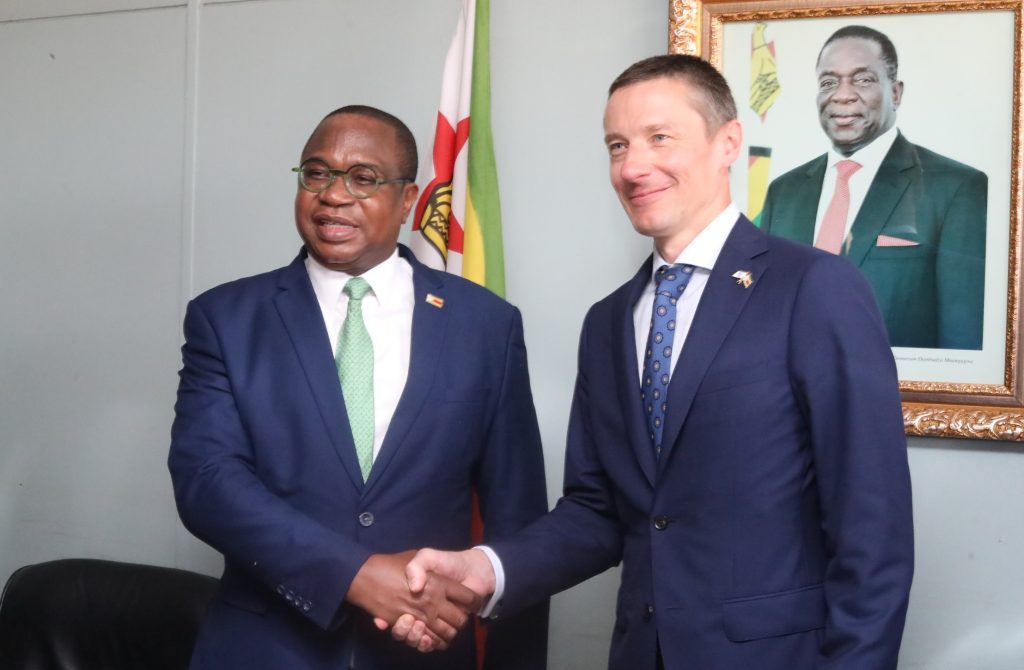
The International Monetary Fund (IMF) and Zimbabwean authorities have reached a staff-level agreement on policies required to complete the second review under the country’s 10-month Staff-Monitored Programme.
The agreement follows a mission to Harare from September 7 to 17, 2026. The agreement marks a crucial milestone in Zimbabwe’s efforts to stabilise its macroeconomic environment and build a track record toward debt restructuring and re-engagement with international creditors.
Led by IMF mission chief Wojciech Maliszewski, the visiting team evaluated Zimbabwe’s economic performance and confirmed that program implementation through the end of June 2026 was robust.
All quantitative and indicative targets were met, with the exception of the indicative target on protected social and priority spending.
“Completion of the review would mark a further step in consolidating macroeconomic stability and building a track record toward arrears clearance, debt restructuring, and re-engagement with the international community,” the IMF said in a statement.
The Bretton Woods institution said Zimbabwe’s economy expanded by 8.3% in 2025 and is projected to grow by 5% in 2026.
Annual inflation fell to a low single-digit rate of 2.9% in August 2026, driven by tight monetary policy from the Reserve Bank of Zimbabwe and relative exchange rate stability.
It added that the country’s current account is also expected to remain in surplus for the remainder of the year, bolstered by strong export receipts and remittance inflows.
Economic growth is expected to moderate to 3.5 percent in 2027 due to the anticipated impact of a super El Niño event, though the projection factors in planned government mitigation efforts.
The IMF noted that the outlook faces downside risks if climate conditions worsen or if government intervention measures experience delays.
The lender said fiscal performance through the end of June exceeded expectations as a result of robust revenue collection, offering the Treasury an opportunity to build fiscal buffers while adhering to its approved budget.
However, the IMF expressed concern over the missed target for protected social and priority spending.
“The shortfall in protected social and priority spending remains a significant concern,” the IMF said.
“The missed target underscores the need to improve cash planning and budget execution so that approved resources reach priority programs and vulnerable households in a timely manner.”
On the monetary side, the Reserve Bank of Zimbabwe has maintained a tight monetary policy stance to keep inflation low and contain foreign exchange market volatility.
The central bank has advanced the rollout of an electronic foreign exchange trading platform to enhance transparency and is developing a comprehensive strategy to further liberalise the currency market, strengthen monetary operations, and reform its foreign exchange intervention framework.
The IMF highlighted structural advances in public financial and debt management, including bringing US dollar payments within the public financial management system and finalising a framework for liability management operations.
Progress was also cited in governance initiatives, including the preparation of the National Anti-Corruption Strategy 2 and the publication of financial statements for the Mutapa Investment Fund.