The Zimbabwe Industrialisation Conference and Expo 2026 kicks off on Thursday, bringing together policymakers, investors, and industry executives to formulate actionable solutions for the country’s industrial sector.
The high-level event, scheduled for July 23 to 24 at the Harare International Conference Centre, is organised by the Ministry of Industry and Commerce in partnership with development think-tank Africa Economic Development Strategies (AEDS) and ZimTrade.
The event comes at a time when the country is witnessing industrial transformation, as evidenced by the establishment of new enterprises and retooling across various sectors of the economy, including iron and steel, food and beverages and mining.
AEDS executive director, Gift Mugano, confirmed that the two-day event is designed to be a practical deal-making platform rather than a traditional talk shop. He added that preparations for ZICE 2026 are progressing on course.
Mugano highlighted that ZICE 2026 will be private-sector-led, recognising businesses as the primary drivers of industrialisation.
“The primary objective of the Zimbabwe Industrialisation Conference and Expo is to move beyond dialogue to facilitate real investment deals, strengthen local value chains, and accelerate the country’s broader industrial transformation,” he said.
A central component of the conference’s agenda will focus on accelerating industrial policy implementation to drive the country’s Vision 2030 targets.
Deliberations will prioritise value chain development and localisation to reduce import reliance, alongside strategies to enhance export competitiveness and the African Continental Free Trade Area integration.
Delegates will also analyse the newly emerging iron and steel industrial ecosystem, a discussion highly relevant given the Manhize steel project and its potential to drive heavy industry downstream.
To ensure this growth benefits all sectors, sessions are designed to explore small- and medium-sized enterprises’ integration and inclusive industrialisation, alongside critical discussions surrounding industrial financing and investment mobilisation to unlock affordable, long-term capital for local companies.
Discussions will also address mineral beneficiation and resource-based industrialisation, seeking to scale up the domestic processing of strategic minerals.
These efforts will be tied to energy and infrastructure industrialisation as critical enablers for sustaining production.
Participants will discuss leveraging technology, innovation, and industrial upgrading to boost manufacturing efficiency, while balancing these advancements against global demands for sustainability and green industrialisation.
With over a thousand corporate leaders and hundreds of exhibitors registered to attend, ZICE 2026 aims to secure a robust pipeline of bankable investment projects to accelerate Zimbabwe’s economic transformation.
Martin Kadzere, The Herald
A LOCAL economic think tank, Africa Economic Development Strategies (AEDS), has proposed a comprehensive road map to transition Zimbabwe to a mono-currency system “as early as 2028” through the exclusive use of the local unit.
In an interview on the sidelines of the Mid-Term Economic Review and High Policy Dialogue in Harare last week, organised by AEDS, its executive director, Professor Gift Mugano, said the multi-currency regime heavily favours the United States dollar, effectively neutralising the impact of domestic monetary policies.
The policy proposal comes ahead of the 2026 Mid-Term Fiscal and Monetary Policy review, which will take stock of the impact of Zimbabwe’s macroeconomic stabilisation strategies and suggest interventions where needed.
While the government had previously set a 2030 deadline to phase out the multi-currency framework, policy has since shifted away from rigid timelines.
The authorities now maintain that these specific economic milestones — referred to as “conditions precedent” — must first be achieved before the country can safely transition to a sole local currency to gain more leverage over the domestic economic trajectory.
Recent economic data indicates that Zimbabwe is on a firm path towards achieving these core fundamentals.
Driven by robust foreign currency inflows and prudent monetary discipline, the country’s foreign exchange reserves are steadily building, with two-month import cover likely to be achieved by year-end, moving closer to the targeted three-to-six-month safeguard.
Concurrently, the local currency exchange rate has maintained strong stability, trading within a predictable interbank range, while successfully containing the parallel market premium.
Backed by these strengthening buffers, annual local currency inflation now hovers within the single-digit range, establishing a stable macroeconomic foundation that economists believe will naturally cultivate public confidence and drive the market towards a mono-currency transition.
Prof Mugano noted that despite the Reserve Bank of Zimbabwe (RBZ) successfully keeping reserve money within safe limits at ZiG6,9 billion as of May 1, public memory of past hyperinflation continues to fuel heavy reliance on foreign cash for daily transactions and savings.
According to Prof Mugano, the central bank cannot resolve the currency’s limited circulation in isolation.
Instead, a deliberate fiscal effort is required to systematically “manufacture” domestic demand for Zimbabwe Gold (ZiG).
“We must confront the reality that our current multi-currency framework is heavily skewed in favour of the US dollar,” said Prof Mugano.
“As long as the greenback dominates daily commerce, it effectively neutralises the domestic monetary transmission mechanism, leaving the central bank with very few levers to steer the local economy.”
The primary recommendation from AEDS targets amending part of the Finance Act that dictates that companies pay their taxes in the exact currency they use to trade.
Under the current regulations, large exporters, such as mining firms, are legally required to liquidate 30 percent of their foreign currency earnings into ZiG under central bank mandatory retention laws.
However, because they are not compelled to utilise the local currency to settle their large tax obligations, these firms immediately crowd the interbank market to trade ZiG back for US dollars.
“Amending the Finance Act to mandate that major national tax heads like VAT (value-added tax) and duties be paid in local currency will fundamentally alter corporate behaviour from day one,” said Prof Mugano.
To sweeten the deal for industry and encourage compliance, Prof Mugano suggested that a preferential tax regime should be introduced.
Under this framework, economic agents paying their taxes and duties in ZiG would enjoy lower tax rates compared to those opting to or required to settle in US dollars, making transactions in the local unit financially advantageous.
This structural shift would fundamentally alter corporate behaviour, forcing firms to hold and utilise the local currency rather than immediately offloading it.
Crucially, Prof Mugano warned that this transition must not be rushed.
He emphasised that the policy approach should be “strictly staggered”, cognisant of the risk that an abrupt implementation could severely disrupt the markets, shatter fragile confidence and trigger runaway inflation.
“This transition must avoid the pitfalls of sudden policy shocks, which would rattle the markets, destroy fragile public confidence and risk runaway inflation,” he said.
“What AEDS is proposing is a strictly staggered, programmatic approach over the next two years that allows economic agents to adjust without disrupting industrial productivity.”
To safely expand the supply of ZiG without risking inflationary pressures through unbacked printing, the AEDS policy proposal outlines a regulated, cyclical liquidity framework.
Under this model, the Treasury would consider selling its foreign currency balances — accumulated from US dollar tax collections — directly to the central bank in exchange for ZiG.
This mechanism would achieve a dual purpose.
It would immediately increase the country’s official US dollar reserves at the Reserve Bank of Zimbabwe (RBZ), while providing Treasury with the necessary local currency liquidity to pay local contractors and service providers in line with its recent policy announcements.
Crucially, the RBZ would only issue the new ZiG in direct exchange for Treasury’s hard currency, ensuring that every single note or coin introduced into domestic circulation is fully backed by real-time foreign currency reserves.
Because the Government would have already established an active structural demand sink by requiring major corporate taxes to be settled in the local currency, this expanded liquidity would be naturally and productively absorbed by the business ecosystem.
Consequently, this managed circulation would fulfil domestic transactional needs without leaking excess liquidity onto the parallel market.
This article first appeared on: https://www.heraldonline.co.zw/think-tank-maps-road-map-to-zig-mono-currency/
Kudzanai Gerede, The Financial Gazette
TREASURY should create stronger demand for the local currency through tax policy changes in the mid-term budget review expected later this month to accelerate the transition to a mono-currency system, Africa Economic Development Strategies (AEDS) executive director Gift Mugano has said.
This comes as the current level of dollarisation continues to undermine efforts by the authorities to establish ZiG as the sole medium of exchange once the ‘conditions precedent’ are met.
Crucially, the Reserve Bank of Zimbabwe (RBZ) is targeting to raise foreign currency reserves of up to six-month import cover before mono-currency transition.
“The current situation shows the intensity of dollarisation at the expense of a drive towards mono-currency and can be corrected by creating demand for ZiG. This requires Treasury and the whole system of government to tilt towards the use of ZiG by increasing proportions of taxes (i.e., VAT, import duties, and excise duties) in ZiG,” Mugano told delegates at the AEDS Mid-Term Economic Review High-Level Policy Dialogue this week.
“In some instances, the treasury may need to make a deliberate move to demand payment of selected tax heads exclusively in ZiG.”
Authorities have been implementing several measures aimed at strengthening confidence in the ZiG, albeit with limited success, while maintaining a multi-currency regime, a situation that has seen the market opt for a much more stable greenback.
Mugano said the current tax framework was inadvertently limiting the circulation of ZiG within the economy and increasing pressure on the foreign exchange market.
“In the same vein, the Treasury may need to consider amending the Finance Act, which compels firms to pay taxes in the currency of trade for the simple reason that miners cannot use the ZiG received from the central bank under the 30 percent export retention. At the moment, miners participate in the interbank market with a view of securing foreign currency on their ZiG balances, yet they could have given it to the Treasury and reduce pressure on the foreign exchange market,” he said.
He also proposed a mechanism under which the Treasury would exchange its foreign currency tax collections for newly issued ZiG backed by those foreign currency holdings.
“In addition, the Treasury should consider selling its foreign currency balances (received from ZIMRA) in exchange for ZiG (which will be printed by RBZ in exchange for the USD),” he said.
Mugano argued that such an arrangement would increase the circulation of ZiG for domestic transactions while strengthening the RBZ’s foreign currency reserves.
“This will create the supply of ZiG which will enable the Treasury to pay local service providers in ZiG in line with its recent announcement whilst at the same time increasing the USD reserves at the Central Bank. With this approach, we can fast-track monocurrency by 2028,” he said.
He however stressed that achieving a successful transition to a mono-currency economy required coordinated action between fiscal and monetary authorities instead of relying solely on the central bank.
“The RBZ alone can’t increase the supply of ZiG – we need a structured approach which is demand driven and every ZiG printed must be backed by or exchanged with foreign currency so that we avoid runaway exchange rate and inflation,” he said.
In the same vein, Grain Millers Association of Zimbabwe (GMAZ) chairman Tafadzwa Musarara said authorities should ensure that the local currency is entrenched in the local agricultural value chain, including payments to the Grain Market Board (GMB).
“Our biggest handicap was in the acquisition of wheat from GMB which insists on 100 percent US dollars. We need the GMB to accept the local currency since it also makes payments to commodities delivered in local currency,” Musarara said.
The situation is even worse in the informal market, where most transactions are conducted in physical US-dollars.
This story first appeared on: https://fingaz.co.zw/2026/07/05/treasury-urged-to-boost-zig-demand/
Kudakwashe Chibvuri, ZiFM
Industry and Commerce Minister Mangaliso Ndlovu says government is intensifying efforts to promote local products and reduce reliance on imports that are draining billions of dollars from the economy and straining national budgets.
In a presentation on his behalf by the Ministry’s Acting Director, Ruvimbo Sandauke, at the Africa Economic Development Strategies Mid-Term Economic Review High-Level Policy Dialogue, Minister Ndlovu said government is set to introduce a Local Content Digital Platform aimed at empowering local manufacturers and producers while strengthening procurement systems.
The Minister said the platform will allow companies to upload details of their production processes, enabling authorities to assess and rate local content compliance.
The ratings will help the Procurement Regulatory Authority of Zimbabwe prioritise highly rated local products during tender processes.
“We are currently working through the Local Content Committee on what we call a Local Content Digital Platform. It is a new system that will help firms upload their production processes, and this will assist in local content rating,” said Minister Ndlovu.
“That information will then be shared with clients and procurement authorities so that when tenders are being awarded, priority is given to local producers who meet the necessary minimum requirements,” he added.
The initiative comes as government ramps up efforts to boost domestic production, support local industries and reduce the country’s growing import bill.
Martin Kadzere, The Herald
Zimbabwe has achieved unprecedented economic stability and predictability, providing a firm foundation for sustainable growth and transformation, key stakeholders noted during the Mid-Term Economic Review and High-Level Policy Dialogue in Harare.
Hosted by a local think tank, the Africa Economic Development Studies (AEDS), the forum brought together business executives, policymakers, monetary authorities and Government officials, who emphasised that maintaining discipline was now vital to accelerating investment across all value chains and driving industrialisation.
The high-level gathering served as a stock-taking platform for the first six months of the fiscal year, to analyse domestic trends, evaluate independent economic modelling and directly inform Zimbabwe’s forthcoming Mid-Term Fiscal Policy and Monetary Policy review.
Zimbabwe has maintained macroeconomic stability since September 2024, anchored primarily by the Zimbabwe Gold (ZiG) currency.
The stabilised currency has successfully tamed inflation, bringing it down to single digits, while stabilising the exchange rate and establishing a predictable environment for businesses.
Reserve Bank of Zimbabwe (RBZ) deputy governor Dr Innocent Matshe assured delegates at the forum that the central bank remained committed to protecting economic stability gains, ensuring the market retains its newfound predictability.
“We will make sure all efforts will be invested and will remain,” he said, pointing to robust macroeconomic fundamentals and a tightening grip on monetary policy.
He said the country’s foreign exchange reserves would reach US$2 billion by the end of the year, while maintaining a stable exchange rate and keeping inflation firmly within single digits.
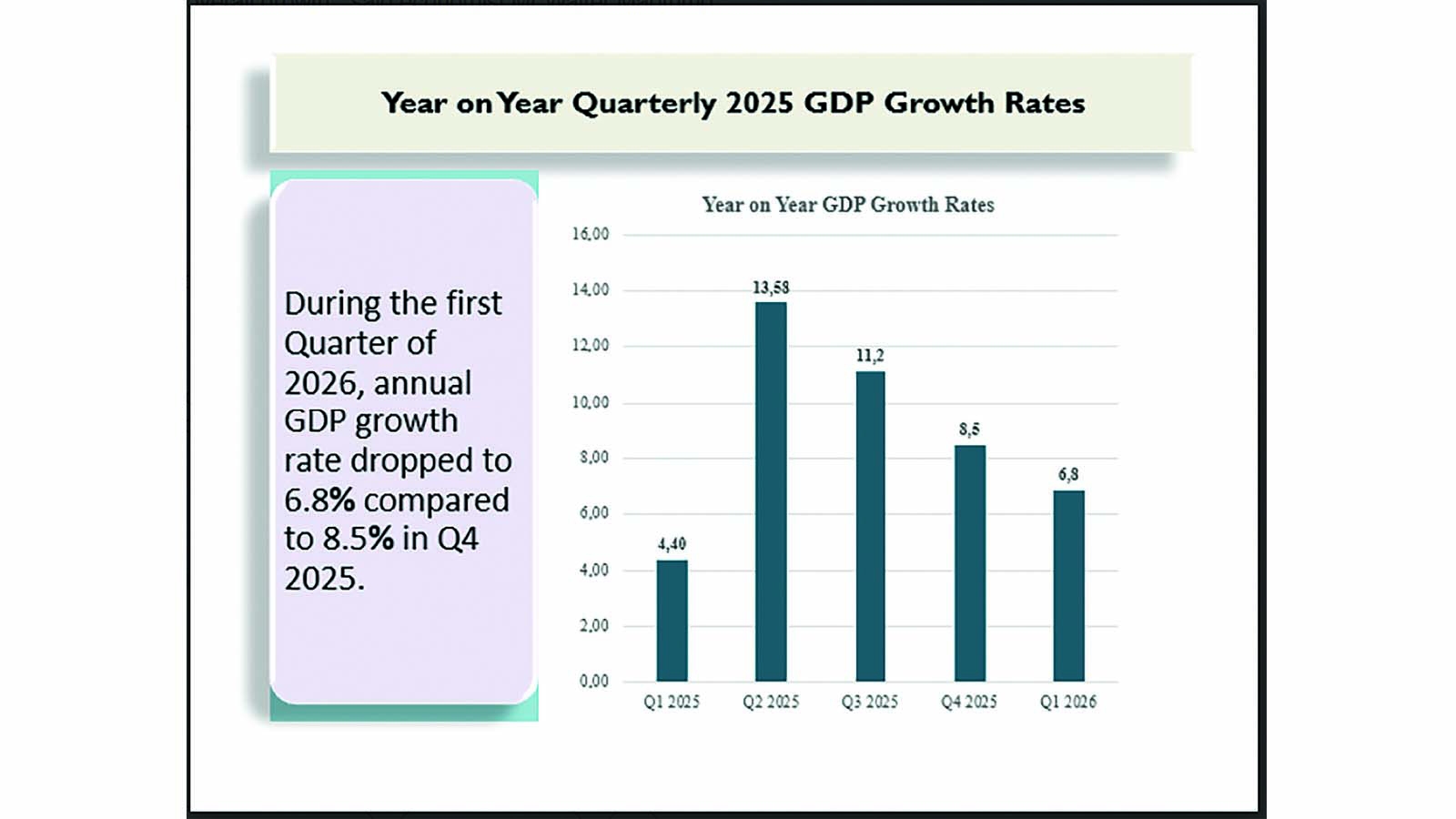
The economy is projected to grow by 5 percent this year. While lower than the 8.3 percent growth rate recorded in 2025, he emphasised that Zimbabwe remains one of the fastest-growing economies in the region, making it a prime destination for foreign investment.
Dr Matshe said foreign currency reserves reached US$1,6 billion last week, providing roughly 1,5 months of import cover.
“Import cover should ideally be between three and six months. We are halfway there,” Dr Matshe said, adding that the central bank expects to achieve a “two times cover” by the end of the year.
Addressing economic agents who may be betting on a potential sudden depreciation to devalue their local currency debts, Dr Matshe issued a clear warning:
“A lot of us wish for the exchange rate to depreciate so that those loans that we took will be expensed, but it’s not going to happen . . . The era of speculating on currency is over.”
Following signs of sustained economic stability, the RBZ lowered its policy rate to 35 percent to support growth, from 35 percent.
However, Dr Matshe stressed that the central bank will keep its guard up to ensure the country does not drift backward.
“The low levels of annual and month-on-month inflation confirm our policy thrust has effectively eased inflationary pressures and anchored expectations,” he said.
Representing Industry and Commerce Minister Mangaliso Ndlovu, acting director (heavy industries) Ms Ruvimbo Sandauke said that with economic stability now secured, current policy frameworks must focus on accelerating industrialisation and growth.
Ms Sandauke highlighted various policy interventions currently being implemented by the ministry to drive industrial growth, foster local content, promote industrial transformation, and diversify exports.
AEDS board chairman Dr Farai Matanhire said the economy was showing broad-based resilience and despite severe pressures from global geopolitical fragmentation and trade disputes.
“In our economy, Zimbabwe is uniquely exposed to the turbulence of global fragmentation,” Dr Matanhire said during his welcome remarks to policymakers and private sector executives.
“Escalating trade disputes, shifting alliances, and regional conflicts are no longer distant. They translate into real domestic challenges — volatile commodity prices, disrupted supply chains and constrained access to global financial markets.”
Despite these external headwinds, Dr Matanhire highlighted a positive mid-year narrative driven by targeted regulatory changes and decisive monetary policies.
He said a primary anchor of the current economic stability was the tight monetary baseline maintained by the central bank.
Dr Matanhire also pointed to a series of recent domestic reforms designed to slash sovereign risk and enhance operational certainty for investors, which include the total abolition of trading levies, a temporary freeze on selected mining exploration fees and the complete rollout of a computerised mining cadastre system to manage claims transparently.
He underscored that the country’s deliberate policy shift towards domestic value addition — enforced through localised lithium processing facilities and concentrate quotas — is successfully capturing greater local profits from ongoing global supply chain realignments.
Economist Mr Brains Muchemwa commended the growing culture of discipline among policymakers, noting that the resulting economic stability is historic and represents a significant departure from previous years.
“The economy is in the right direction, expectations are quite positive and there is predictability,” he said.
He, however, expressed caution regarding the country’s 40 percent year-on-year money supply growth—arguing it needs to be managed to align more closely with regional peers.
Dr Matshe countered that, when comparing Zimbabwe to its neighbours, noting local money supply expansion simply mirrors a rapidly growing economy.
He emphasised that despite starting from a low baseline, Zimbabwe is currently the fastest-growing economy in the region, a reality that is naturally reflected in its monetary growth patterns.
Capitalising on this stable economic climate, AEDS — in partnership with the Ministry of Industry and Commerce and ZimTrade — is hosting the Zimbabwe Industrialisation Conference and Expo 2026.
Business Reporter, Zimpapers
The Reserve Bank of Zimbabwe (RBZ) has forecast the country’s foreign exchange reserves to reach US$2 billion by the end of the year, while the exchange rate is expected to remain stable, which will anchor the prevailing single-digit inflation.
Speaking at the Africa Economic Development Strategies (AEDS) Mid-Term Economic Review High-Level Policy Dialogue in Harare, RBZ deputy governor Dr Innocent Matshe declared that the “era of speculating on currency is over,” pointing to robust macroeconomic fundamentals and a tightening grip on monetary policy.
Dr Matshe revealed that Zimbabwe’s economy is projected to grow by five percent this year. While lower than the 8.3 percent growth rate recorded in 2025, he emphasised that Zimbabwe remains one of the fastest-growing economies in the region, making it a prime destination for foreign investment.
A key anchor for the local currency, ZiG, has been the aggressive accumulation of strategic reserves over the past 12 months.
Dr Matshe reported that foreign currency reserves reached US$1,6 billion last week, providing roughly 1,5 months of import cover.
“Import cover should ideally be between three and six months. We are halfway there,” Dr Matshe said, adding that the central bank expects to achieve a “two times cover” by the end of the year.
He further noted that the RBZ holds six times the stock of ZiG reserve money and double the cover for all local currency deposits.
To improve market transparency and eliminate the perception that the central bank fixes the exchange rate, Dr Matshe announced that the RBZ is transitioning to a digital trading platform.
The system will allow economic agents to interact freely using real-time data under the current willing-buyer-willing-seller framework.
The deputy governor highlighted that the parallel market premium has narrowed, with the official exchange rate stabilising between 25 and 27 ZiG per US dollar.
Addressing economic agents who may be betting on a sudden devaluation to erode their local currency debts, Dr Matshe issued a clear warning:
“A lot of us wish for the exchange rate to depreciate so that those loans that we took will be expensed, but it’s not going to happen . . . The era of speculating on currency is over.”
On inflation, Dr Matshe expressed confidence that annual figures will remain well below double digits.
Annual inflation for May stood at 4,7 per cent, from 4,4 percent previously.
While a slight uptick was noted in US dollar-denominated components — driven by global inflationary pressures imported into the country — local month-on-month inflation has remained flat.
Dr Matshe compared managing a national economy to driving a heavy vehicle.
“A national economy is a big truck, it’s not a small car. It turns slowly, and therefore the turning curve may sometimes be much larger than you expect,” he explained.
Following signs of sustained economic stability, the RBZ lowered its policy rate by 5 percent in June to support growth, moving away from 35 percent.
However, Dr Matshe stressed that the central bank will keep its guard up to ensure the country does not drift backward.
“Monetary policy has been very patient,” Dr Matshe said.
“The low levels of annual and month-on-month inflation confirm our policy thrust has effectively eased inflationary pressures and anchored expectations.”
This article first appeared on: https://www.heraldonline.co.zw/zimbabwe-forex-reserves-to-reach-us2-billion/
Martin Kadzere, martin.kadzere@zimpapers.co.zw
THE stable economic environment anchored by the Zimbabwe Gold (ZiG) has significantly enhanced long-term planning, savings and investment conditions for local industries, a senior corporate executive said.
ZIMBABWE could face a severe food security crisis if escalating tensions in the Middle East trigger prolonged disruptions in global fertiliser markets, potentially cutting national maize production by as much as 80%, according to a new report by economic think-tank Africa Economic Development Strategies (AEDS).
READ MORE
Martin Kadzere
Zimbabwe’s grain and oilseed processors have committed to developing a comprehensive roadmap to support agriculture, following a high-stakes, closed-door meeting with the Government last week.
The meeting was convened to address escalating friction over Statutory Instrument (SI) 87, which mandates local production, issued under the Agricultural and Marketing Authority (AMA) ( Grains, Oilseeds, and Products) Regulations 2025.
Martin Kadzere
THE Reserve Bank of Zimbabwe will sustain the push towards using a single currency for all internal transactions, leveraging the broad successes of 2025 as a foundation for economic stability while stressing that the transition will be a multi-stage process rather than an overnight shift.
Representing RBZ Governor Dr John Mushayavanhu at the State of the Economy and 2026 Economic Outlook breakfast meeting in Harare yesterday, deputy governor Dr Innocent Matshe said a domestic currency was a non-negotiable prerequisite for national competitiveness.
Regional independent think-tank, the Africa Economic Development Strategies (AEDS), in partnership with Business Times, organised the breakfast meeting.
Since its introduction on April 5, 2024, as a structured currency backed by gold and foreign currency reserves and building on the fiscal discipline by Government since the advent of the Second Republic and now a high level of monetary discipline, the ZiG has achieved remarkable resilience, tamed inflation and stabilised the exchange rate.
It has strengthened against the US dollar by 1,5 percent since the beginning of the year to ZiG25,590 from ZiG25,9807 to US$1.
Dr Matshe reiterated that the adoption of the ZiG as a mono-currency would be dictated by rigorous economic milestones rather than arbitrary deadlines.
Central to this roadmap is the requirement for durable macroeconomic stability, characterised by low inflation and the accumulation of foreign reserves equivalent to at least 3,6 months of import cover.
This is now on the cards as Zimbabwe moves into sustained positive balance of trade, exporting more than it imports.
To ensure the ZiG succeeds, the RBZ is prioritising a unified exchange rate system, stable currency dynamics and a recalibrated tax framework designed to mandate the payment of public services in local currency.
The transition is further anchored by a “back-to-basics” policy cohesion between the Treasury and RBZ, aimed at maintaining sustainable budget deficits and fostering public trust in the financial system.
Borrowing is now only permitted for that part of the capital budget where there is an immediate new stream of revenue that can be used to service the borrowing.
To support this transition, Dr Matshe said durable, modern and secure banknotes would be released late in the first quarter or early in the second quarter of this year.
“Overall, the Reserve Bank will aim to entrench macroeconomic stability in support of the roadmap to mono-currency and attainment of National Development Strategy 2 objectives of realising a prosperous and empowered upper-middle-income society by 2030,” said Dr Matshe.
He said the public should understand that “what is driving mono-currency is not a date, but the condition in which the economy is rapidly transitioning to mono-currency”.
Zimbabwe legalised the continued use of the multi-currency system until December 31, 2030, providing a clear legal framework for the use of the US dollar alongside the local currency.
The previous deadline of 2025 had created significant policy uncertainty.
Banks were reportedly hesitant to offer long-term US dollar loans extending beyond 2025, which threatened to stifle credit growth in the private sector.
Dr Matshe noted that the central bank’s roadmap is bolstered by several milestones achieved over the past year, with key indicators showing a significant cooling of the economy and a stabilisation of the ZiG.
Annual ZiG inflation plummeted to 15 percent by early last year, beating the initial 30 percent target.
Month-on-month inflation remained stable, averaging 0,4 percent since February 2025. This will shortly see annual ZiG inflation falling into single figures.
Dr Matshe hinted that January annual inflation figures, due next week, could reach single digits, meeting the SADC regional benchmarks of 3 to 7 percent.
Foreign currency receipts reached a record US$16,2 billion in 2025, up from US$13,3 billion in 2024, driven by record gold prices.
This drive in exports, with only modest adjustments in imports, had created the positive trade balance.
The interbank exchange rate remained steady at approximately ZiG26 per US dollar, with the parallel market premium contained below 20 percent.
For the first time in recent history, the RBZ reported zero central bank financing of Government expenditure, a move credited to tight coordination with the Ministry of Finance, Economic Development and Investment Promotion.
“I really need to applaud the Ministry of Finance, Economic Development and Investment Promotion for giving us the space to make sure that we restrict central bank financing of Government expenditure,” said Dr Matshe.
Foreign currency reserves climbed to US$1,2 billion by December 2025, providing 1,5 months of import cover.
The reserves now cover the local reserve money stock approximately six times and represent double the value of all total ZiG deposits in the system.
“The Reserve Bank remains committed to keeping money supply growth in check to ensure durable, low and sustainable inflation,” said Dr Matshe.
He noted that local currency money supply growth fell from 10 percent to an average of just 2 percent in 2025.
Zimbabwe is expected to record a strong current account surplus of about US$1 billion in 2025, double the US$500 million recorded in 2024.
Despite a conservative projection of 5 percent growth for 2026, Dr Matshe suggested the outturn could be significantly higher, following an estimated 6,6 percent growth in 2025.
He warned that the “base might change” if 2025 figures are revised upwards, but maintained that the overarching story is one of a positive trajectory.
AEDS executive chairman Professor Gift Mugano noted that Zimbabwe has maintained exchange rate stability since September 2024, with premiums falling below 20 percent.
“There is no one who is asking about exchange rates on a daily basis or anyone who runs to offload ZiG,” said Prof Mugano.
In terms of ZiG use, he anticipates it will continue to gain a foothold in formal markets, but the US dollar will remain dominant for savings.
Despite a positive baseline forecast, Prof Mugano warns that fiscal policy slippage, if not carefully watched, remains the primary threat to national economic stability.
To safeguard the disinflation trajectory and protect the ZiG, he called for a “non-negotiable” commitment to budget discipline and a zero-tolerance stance on quasi-fiscal operations.
Interest rates should remain restrictive throughout 2026, shifting from administrative controls to market-based liquidity management.
Authorities must prepare for exogenous shocks, Prof Mugano said, including potential oil price hikes driven by geopolitical tensions in the Americas following the US interference in Venezuelan politics, and local climate risks like flooding.
To boost financial intermediation, the RBZ should consider lowering reserve requirements for banks that prioritise lending to agriculture, manufacturing, and SMEs.
Stability must be anchored in real-sector competitiveness rather than demand suppression, ensuring “inclusive growth” that benefits all citizens.
Notably, though, Treasury is already running a tight fiscal policy that involves reducing Government spending, like on luxury vehicles and foreign travel, and controlling quasi-fiscal activities to curb inflation and maintain ZiG stability.