
The formal admission of Zimbabwe into the BRICS New Development Bank (NDB) represents a monumental structural shift in Southern Africa’s geopolitical and economic landscape.
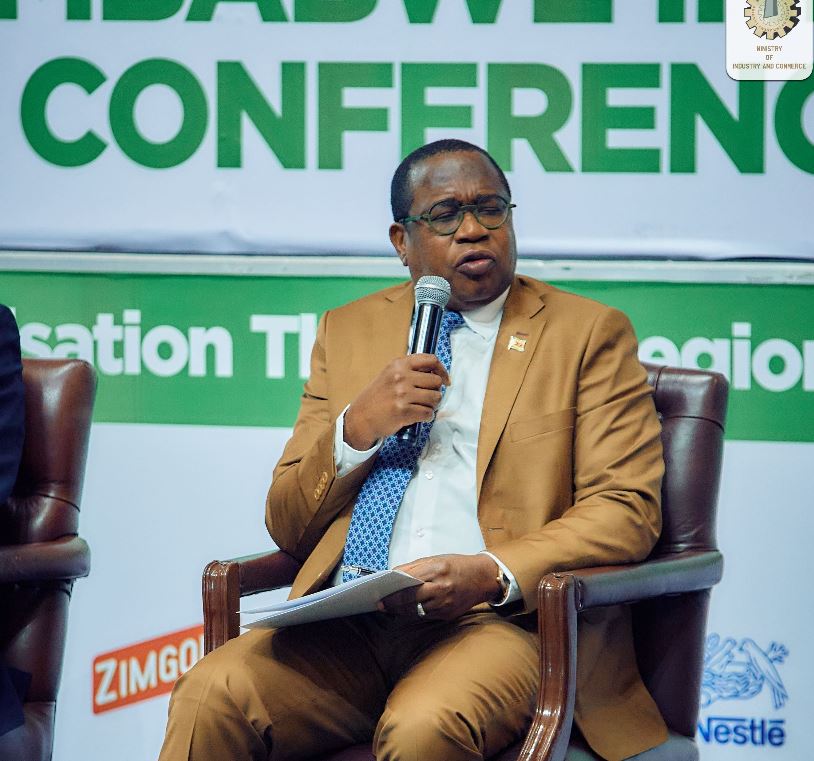
Minister of Finance, Economic Development, and Investment Promotion Professor Mthuli Ncube announced the admission at the Zimbabwe Industrialisation Conference and Expo 2026, marking a critical structural turn in Southern Africa’s geopolitical and economic trajectory.
The admission of Zimbabwe into the Shanghai-based NDB reflects a departure from an international financial framework that has constrained the nation’s productive capacity for decades.
“The approval is a significant milestone in the country’s engagement and re-engagement, as well as international cooperation. This is a breakthrough for the country’s economic recovery strategy, as this will assist in mobilising long-term financing for infrastructure and other developmental projects at reasonable cost,” Prof Ncube said.
He added that this is against the background of over two decades without access to direct concessionary loans or lines of credit from 190 traditional international financial institutions, particularly for infrastructure developmental projects.
To fully activate the membership, the Treasury Chief said Government will deposit an instrument of accession to the agreement and commence the payment of subscriptions.
Zimbabwe establishes a practical mechanism to address the persistent capital deficit that has long limited domestic industry and infrastructure development by securing access to the primary financial institution of the Global South.
For over twenty years, the Zimbabwean economy remained bound by a persistent multilateral bottleneck.
Having accumulated external arrears following economic shocks and structural defaults around the turn of the century, the country found itself consistently excluded by traditional Western multilateral institutions, including the International Monetary Fund and the World Bank.
These lenders maintained a strict policy requirement, with the southern African nation required to complete debt clearance and specific structural reforms were demanded before fresh concessional lending would be extended.
This created a self-reinforcing cycle wherein the state was expected to service international obligations while lacking the long-term capital required to build modern power grids, retool industrial facilities, and expand export capacity to generate those necessary revenues.
This institutional stalemate was further complicated by political friction. While multilateral institutions framed credit freezes around technical risk metrics and policy compliance, Harare viewed these measures as deliberate tools to restrict fiscal policy options.
The existing global financial structure effectively tied capital access to specific policy stances, leaving developing nations with few choices between policy independence and essential development funding.
Even when Zimbabwe made verified efforts toward debt service and fiscal adjustment, access to long-term multilateral credit remained restricted, forcing both state enterprises and private firms to rely on high-cost, short-term commercial debt that deepened underlying financial pressures.
Entry into the New Development Bank changes this fundamental operating model. Established by the founding BRICS members as an alternative to traditional financial institutions, the NDB functions on explicit principles of sovereign equality, non-interference, and South-South cooperation.
The institution evaluates credit proposals through project viability, financial return, and baseline economic impact rather than political alignment.
For Zimbabwe, this shifts the relationship from continuous policy negotiation to project-based funding, allowing capital to be directed toward primary structural priorities.
The practical impact of this accession on the domestic economy centres on liquidity and interest rate pressures.
High domestic borrowing costs and severe shortages of long-term foreign currency have long hindered local businesses.
Manufacturing, mining, and agricultural enterprises have operated with aging equipment, constrained by high interest rates and short loan tenures that prevent major capital investments.
Access to non-fragmented development capital through the NDB offers a viable path for systematic industrial retooling.
Upgrading industrial machinery, modernising rail networks, and expanding bulk water capacity remain necessary conditions for moving the domestic economy from raw commodity exports toward higher-value processing.
Furthermore, the alignment between NDB financing programs and Zimbabwe’s power requirements addresses a core operational vulnerability.
Severe droughts have repeatedly compromised hydroelectric output at Kariba, exposing weakness in the national grid and forcing load-shedding that reduces industrial output.
The NDB maintains specific mandates for funding green infrastructure and modern energy distribution.
Dedicated funding streams for solar installations, upgraded transmission networks, and climate-resilient agricultural systems directly address these supply constraints, helping stabilise industrial output against environmental variations while supporting the execution of the National Development Strategy framework.
At the macroeconomic level, targeted capital injections support the national balance of payments and reserve stability.
Persistent foreign currency shortages and trade imbalances have historically driven local currency volatility and domestic price increases.
NDB-financed infrastructure functions as a structural stabiliser rather than an added liability by enabling domestic producers to scale operations, supply local markets, and increase export capacity.
Furthermore, the bank’s policy of executing transactions in member-state currencies provides Zimbabwe with an option to reduce exposure to external currency fluctuations and global dollar liquidity constraints.
Equally important is the approach NDB membership offers for managing legacy debt. Traditional recovery frameworks frequently relied on expenditure cuts and structural reductions that directly impacted public infrastructure and basic services.
The economy can generate the revenues required to address legacy liabilities from expanded domestic output rather than fiscal contraction by prioritising productive capacity and sector growth through project-specific finance.
Beyond national balance sheets, Zimbabwe’s integration into the NDB illustrates broader shifts in global capital allocation.
It demonstrates the continued growth of alternative financial networks established by emerging economies to address regional development requirements.
Harare diversifies its credit access and reduces reliance on singular capital markets by establishing direct ties with the Shanghai-based institution.
While accession to the New Development Bank does not automatically resolve underlying economic challenges, it directly addresses the primary financial barrier that has limited Zimbabwean industrial growth for years.
The final outcome will depend on implementation—specifically, ensuring that funds obtained through the bank are directed toward economically viable, well-managed projects.